

When the first major cold snap of the season arrives, homeowners expect their furnace to ignite flawlessly the moment the thermostat clicks. Unfortunately, a heating unit that has sat dormant for six months is rarely prepared to handle the sudden, intense demand of winter. Without proper preparation, that initial ignition can trigger a cascade of mechanical failures. This is exactly why proactive Heating System Tune-Ups are considered a mandatory aspect of modern home maintenance.
The assumption that a resting appliance is a safe appliance is a costly misconception. During the long summer months, an inactive furnace undergoes a silent degradation process. Dust settles deep into the mechanical housing, internal lubrication dries out, and electrical connections can loosen due to ambient temperature fluctuations. Expecting this compromised machinery to operate at peak efficiency without an inspection is a major risk.
By understanding the physical toll that inactivity takes on your HVAC equipment, you can avoid freezing nights and emergency repair bills. Comprehensive fall maintenance goes far beyond simply swapping out a dirty air filter. It involves calibrating complex mechanical systems to ensure your home remains warm, energy-efficient, and entirely safe throughout the harshest months of the year.
The Hidden Mechanical Toll of Summer Inactivity
A residential furnace is a high-performance machine requiring precise calibration to operate correctly. When the system sits unused from spring until late autumn, environmental factors immediately begin working against it. The primary enemy of any dormant HVAC system is airborne particulate matter. Even in immaculate homes, microscopic dust, pet dander, and volatile organic compounds are constantly circulating and settling inside the furnace cabinet.
This debris accumulation acts as a thermal insulator on components that desperately need to dissipate heat. When the burners finally ignite in the winter, this coating of dust forces the system to work significantly harder to transfer warmth into your living spaces. The resulting strain reduces the overall output of the appliance and immediately compromises indoor comfort levels.
Dust Accumulation and Airflow Restrictions
The blower motor is the heart of your home's air distribution system. When dust coats the blower wheel blades, it alters their aerodynamic profile. This means the motor must draw more electrical current to spin at the required speed, putting immense stress on the internal windings. Over time, this restricted airflow leads to a condition called short-cycling, where the furnace overheats and shuts itself down prematurely.
Lubrication Loss and Friction Damage
Modern furnaces rely on a network of moving parts, including bearings, belts, and motor shafts. The lubricants that keep these metal components moving smoothly can degrade, separate, or evaporate over a hot summer. When a dry motor is suddenly forced into continuous operation, the resulting metal-on-metal friction generates excessive heat. This friction accelerates mechanical wear and can cause a catastrophic motor failure in the middle of a winter storm.
The Financial Consequences of Neglecting Your Furnace
Homeowners often view preventative maintenance as an optional expense, but skipping this crucial step is a guaranteed way to lose money. A neglected furnace is a fundamentally inefficient furnace. For every year a heating system operates without professional calibration, it loses a measurable percentage of its operating efficiency. This means you are paying more money to your utility company for a lower quality of heat.
Routine Heating System Tune-Ups are an investment that pays immediate dividends. By cleaning the burners, adjusting the gas pressure, and optimizing the airflow, the system requires far less fuel to reach your target temperature. These small adjustments directly counteract the natural efficiency drop, keeping your monthly energy expenditures predictable and manageable.
Inflated Monthly Utility Bills
A furnace struggling against dirty sensors, clogged filters, and dry bearings must run longer cycles to satisfy the thermostat. If your system was designed to run for ten minutes to heat a room, but now requires fifteen minutes due to neglect, your fuel consumption increases by fifty percent per cycle. Over a five-month heating season, this wasted energy adds up to hundreds of dollars in unnecessary utility costs.
Premature Wear and Expensive Component Failure
Beyond the monthly energy waste, avoiding maintenance drastically shortens the lifespan of your HVAC equipment. A furnace that constantly overheats will inevitably fry its control board or crack its heat exchanger. Replacing these major components often costs thousands of dollars. Regular maintenance identifies and resolves minor friction and airflow issues before they can destroy the most expensive parts of your heating system.
Critical Safety Hazards: Carbon Monoxide and Electrical Risks
Efficiency and comfort are important, but safety is the most critical reason to schedule fall maintenance. Your furnace operates by burning combustible fuel, typically natural gas or propane, inside a sealed chamber. This combustion process produces deadly byproducts, including carbon monoxide. A healthy furnace vents these toxic gases safely out of the home, but a compromised system can leak them directly into your ductwork.
Electrical safety is equally important. Furnaces rely on high-voltage capacitors and complex wiring harnesses. Over time, the vibrations of normal operation can loosen these electrical connections, creating a high risk for arcing, short circuits, and even electrical fires. Annual Heating System Tune-Ups allow a technician to tighten all connections and measure the voltage drops to prevent dangerous electrical failures.
Identifying Heat Exchanger Micro-Cracks
The heat exchanger is the metal barrier that separates the toxic combustion exhaust from the breathable air circulating through your home. Because this metal repeatedly expands when heated and contracts when cooled, it is highly susceptible to metal fatigue. Microscopic cracks can form along the seams over time. Only a thorough inspection using specialized tools can detect these invisible fractures before carbon monoxide enters your living space.
What Comprehensive Heating System Tune-Ups Actually Involve
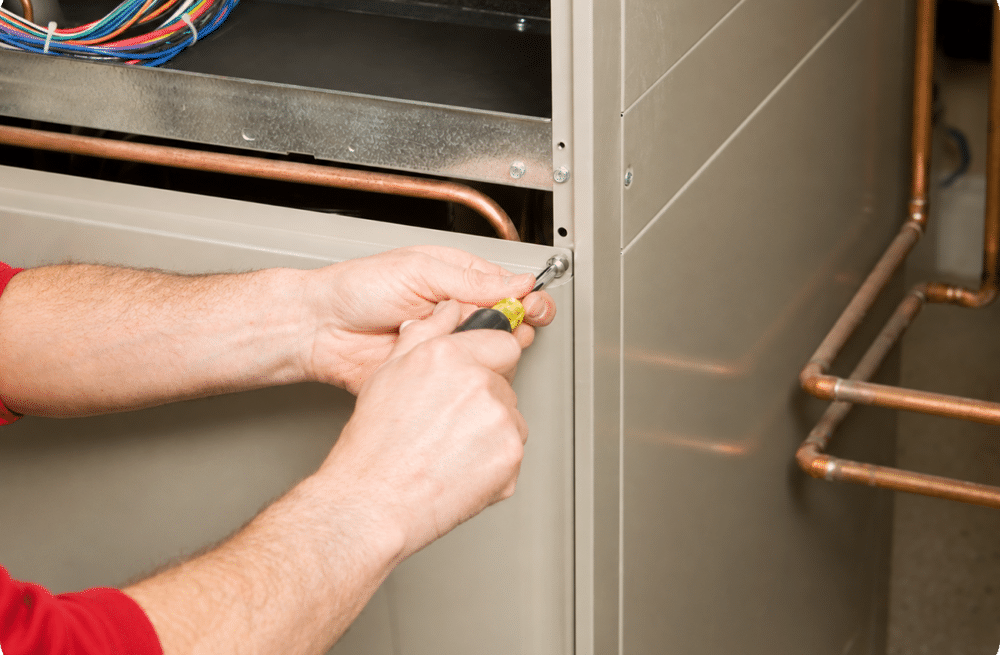
True preventative maintenance is a rigorous, multi-point diagnostic process. A proper inspection begins with the combustion sequence. Technicians will clean the burner assembly, clear the pilot or electronic ignition system, and ensure the flame sensor is free of carbon buildup. This guarantees a safe, consistent ignition every time the thermostat signals for heat.
Next, the electrical components are stress-tested. The technician will measure the amperage draw of the blower motor to ensure it is not working too hard. They will also test the capacitance of the start and run capacitors. If a capacitor is storing a weak charge, it will be replaced immediately to protect the blower motor from electrical damage.
Finally, all safety limit switches are tested. These switches are the fail-safes designed to shut the furnace down if it overheats or if the exhaust venting becomes blocked. Verifying that these safety mechanisms are fully operational is the final, most crucial step in confirming your system is ready for the winter workload.
Professional Solutions from Martinelli Plumbing, Heating & Air Conditioning
Given the technical complexity and inherent dangers of combustion appliances, preparing your furnace for winter is never a do-it-yourself project. Diagnosing a cracked heat exchanger, calibrating gas pressure valves, and testing high-voltage electrical components require specialized training and diagnostic equipment. To ensure your home is truly protected, you need the expertise of a certified HVAC professional.
The team at Martinelli Plumbing, Heating & Air Conditioning provides the elite technical service necessary to secure your home for the winter. Our technicians specialize in comprehensive Furnace & A/C Tune-Ups designed to restore peak efficiency and eliminate safety hazards. We meticulously clean, calibrate, and test every component of your system as part of our rigorous A/C & Heating Maintenance protocols.
If our inspection uncovers a developing problem, we are fully equipped to handle any necessary Furnace Repair on the spot. From addressing simple sensor issues to executing complex Boiler Repair & Replacements, we ensure your home remains warm, safe, and efficient. We do not just fix broken parts; we optimize your entire climate control system for long-term reliability.
Do not wait for the first freezing night to discover your heater is compromised. Schedule your comprehensive maintenance today and enjoy total peace of mind all winter long. For expert service you can trust, visit our contact page or call our dedicated team directly at (609) 239-2930 to book your appointment.
Frequently Asked Questions (FAQs)
Industry manufacturers and HVAC professionals universally recommend scheduling a comprehensive tune-up once a year, ideally in the early fall. Annual maintenance ensures your system is clean, calibrated, and safe before it faces the heavy operational demands of the winter season.
In most cases, yes. The vast majority of HVAC manufacturers include strict clauses in their warranty agreements requiring proof of annual professional maintenance. If a major component fails and you cannot provide maintenance records, the manufacturer has the right to deny your warranty claim.
The heat exchanger is the metal chamber that absorbs heat from the gas burners and transfers it to the air blowing through your ducts. It is the only physical barrier preventing toxic combustion gases, like carbon monoxide, from mixing with your breathable indoor air.
That burning smell is typically the result of dust and debris that settled on the burners and heat exchanger over the summer. When the furnace ignites for the first time in the fall, it literally incinerates this dust. While usually harmless, a professional cleaning prevents this issue and improves indoor air quality.
Yes, significantly. A furnace clogged with dust or struggling with poor lubrication requires more fuel and longer running times to reach the desired temperature. By restoring optimal airflow and burner efficiency, a tune-up minimizes fuel consumption and directly lowers your utility costs.
Protect Your Home with Martinelli Plumbing, Heating & Air Conditioning
Prepare your heating system before the cold weather sets in. From uneven heating to struggling furnace components, Martinelli Plumbing, Heating & Air Conditioning delivers thorough fall and winter tune-ups to keep your equipment running safely and smoothly. Contact our team today to schedule your tune-up and protect your home this season.
From comprehensive water testing and hard water filtration system installations to Water Leak Detection & Repair, Water Line Repair & Replacement, and Water Heater Repair & Replacement, our licensed professionals have supplied trusted home services for decades.
Contact Our Expert Team Today:
Direct Line: (609) 239-2930
Contact Martinelli Plumbing, Heating & Air Conditioning
Website: martinelliplumbing.com
Take control of your water quality today and safeguard your home for years to come!