

When you turn on your kitchen tap or shower, you expect clean, safe water that keeps your home running smoothly. Water looks clear and tastes refreshing, so it is easy to assume everything is fine inside your pipes. However, behind your walls and beneath your fixtures, invisible chemical properties in your water supply could be quietly wreaking havoc on your property.
In many regions, municipal tap water and private wells contain high levels of dissolved minerals or naturally low pH balances. While these chemical characteristics might not always pose an immediate health risk, they act as slow-motion destruction for your home’s infrastructure. Hard water—water packed with excess calcium and magnesium—and acidic water (low pH) are two of the most destructive factors facing modern residential plumbing.
Left unaddressed, hard water creates mineral scale that chokes off water flow, while low pH water eats away at metal piping until pinhole leaks spring open inside your walls. Recognizing the early warning signs can save you thousands of dollars in emergency repairs, structural restoration, and premature appliance replacement.
Here are four hidden signs that hard water and low pH are actively damaging your home, along with what you can do to protect your investment.
1. White, Crusty Limescale Buildup on Faucets & Showerheads
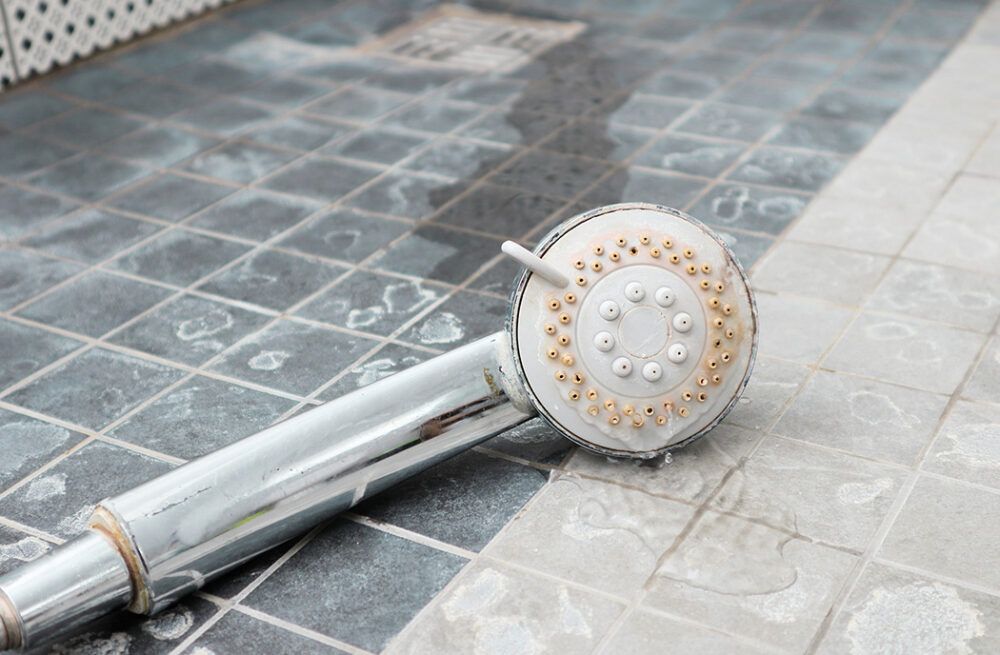
Have you noticed a stubborn, chalky white residue clinging to your bathroom faucets, glass shower doors, or kitchen sprayers? That crusty buildup is known as limescale, and it is the most unmistakable sign of hard water.
When hard water evaporates, it leaves behind concentrated deposits of calcium carbonate and magnesium. What you see on the outside of your fixtures is only a fraction of what is happening inside your plumbing network:
Restricted Flow: Limescale coats the internal walls of aerators, valves, and supply lines, steadily constricting water passage and lowering water pressure across your entire house.
Corrosion Under Deposits: Scale deposits trap moisture and oxygen against metal surfaces, accelerating surface pitting and tarnishing decorative finishes.
Fixture Degradation: Internal rubber washers, seals, and ceramic disc cartridges degrade prematurely when forced to operate against sharp mineral crystals.
If you find yourself scrubbing white crust off your showerheads every few weeks, your plumbing system is sending a clear cry for help.
2. Blue-Green Stains in Sinks & Pinhole Pipe Leaks
While white chalky scale indicates hard water, turquoise or blue-green stains in your sinks, tubs, and toilet bowls point to an entirely different threat: low pH water.
The pH scale measures how acidic or alkaline a liquid is, with 7.0 being neutral. Water with a pH below 6.5 is considered acidic. Acidic water acts as a mild solvent, constantly seeking minerals to neutralize itself. When low pH water flows through copper pipes, it gradually dissolves the metal from the inside out.
The Dangers of Acidic Corrosion
Blue-Green Copper Stains: As copper leaches from your piping into the water, it reacts with air and soap, leaving distinct teal or greenish-blue trails beneath faucets and drains.
Thinning Pipe Walls: Over time, acidic water wears down the internal thickness of copper lines, particularly near joints and elbows where water turbulence is highest.
Hidden Pinhole Leaks: Eventually, the corroded metal becomes paper-thin and ruptures, creating tiny "pinhole" leaks. These micro-leaks often spray undetected behind drywall or under subflooring, triggering structural wood rot and dangerous mold growth.
If you notice unexplained green stains on your fixtures or hear the faint sound of running water when all taps are off, low pH corrosion could already be damaging your home’s infrastructure.
Comparing Hard Water vs. Low pH Water Issues
Hard Water Damage:
Primary Cause: Excessively high concentrations of dissolved calcium and magnesium.
Visible Warning Signs: Chalky white limescale buildup, water spots on glass, stubborn soap scum, and scratchy laundry.
Long-Term Impact: Mineral-clogged piping, premature water heater failure, restricted flow, and reduced appliance lifespan.
Low pH (Acidic Water) Damage:
Primary Cause: Corroded water chemistry with a pH balance below 6.5.
Visible Warning Signs: Teal or blue-green copper stains, a metallic taste, or a slight blue tint in standing tub water.
Long-Term Impact: Weakened copper pipes, hidden pinhole leaks behind walls, wood rot, and costly structural water damage.
Is Your Water Threatening Your Home?
Don’t wait for a burst pipe or a flooded basement to take action. Identifying water quality problems early protects your plumbing, extends appliance life, and keeps your family's water clean and clear.
Martinelli Plumbing, Heating & Air Conditioning, our experienced plumbing technicians specialize in professional water testing, whole-home filtration, and leak prevention. Whether you need an emergency repair or a long-term water quality solution, we are here to help.
Call Us Today: (609) 239-2930
Schedule Online: Visit Our Contact Page
Explore Our Services: Learn more about our Water Treatment & Filtration Solutions
3. Escalating Energy Bills & Premature Water Heater Failure
Your water heater is one of the most expensive and energy-intensive appliances in your home—and it bears the brunt of hard water damage.
When hard water is heated inside a tank water heater, the heat forces dissolved calcium and magnesium out of solution. These minerals settle at the bottom of the tank, forming a dense layer of rock-like sediment.
How Sediment Ruins Your Water Heater
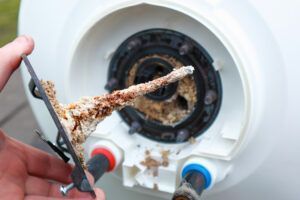 1. Insulation Barrier: Sediment creates a thick barrier between the heating burner or element and the water. Your system has to work twice as hard and run twice as long just to heat the same volume of water, driving up monthly utility bills.
2. Popping & Rumbling Sounds: As trapped water boils beneath the hardened mineral layer, it creates loud popping, cracking, or rumbling noises during heating cycles.
3. Overheating & Tank Rupture: The excessive heat trapped under the mineral layer weakens the steel tank lining, causing thermal fatigue, hairline cracks, and eventual catastrophic tank failure.
Tankless water heaters are equally vulnerable. Mineral scale quickly coats the delicate heating exchanger coils, triggering system error codes, sudden temperature drops, and costly repair bills.
4. Persistent Soap Scum, Stiff Laundry & Low Pressure
Hard water does not just target your pipes and appliances—it impacts your daily quality of life in noticeable ways.
Stubborn Soap Scum: Hard water minerals chemically bind with soap molecules, creating an insoluble curd rather than a rich lather. This curd clings to shower walls, bathtub porcelain, and glass, making cleaning a frustrating struggle.
Dingy, Scratchy Laundry: Washing clothes in hard water traps mineral deposits within fabric fibers. Over time, towels feel rough and scratchy, whites turn gray, and bright colors fade prematurely.
Dry Skin & Dull Hair: Soap curd residue stays behind on your skin and scalp after showering, stripping away natural oils, clogging pores, and exacerbating conditions like eczema.
General Pressure Drops: As scale deposits accumulate inside showerheads, faucet aerators, and main supply lines, overall water flow steadily degrades across the house.
The Solution: Installing a Hard Water Filtration System
If your home exhibits any of these warning signs, off-the-shelf pitcher filters or showerhead attachments will not solve the underlying problem. Protecting your entire home requires a comprehensive, whole-house approach.
Installing a professional hard water filtration system combined with water softening or conditioning technology provides total protection at your home's point of entry.
Key Benefits of a Whole-House Treatment System:
Preserves Plumbing Infrastructure: By removing hard minerals and balancing pH levels before water enters your home, you eliminate pipe-clogging scale and aggressive corrosion.
Extends Appliance Lifespan: Water heaters, dishwashers, washing machines, and ice makers run more efficiently and last years longer without mineral buildup.
Saves Money on Energy & Soap: Softened, balanced water reduces energy consumption in water heaters and allows soaps and detergents to work effectively using up to 50% less product.
Delivers Healthier Skin & Hair: Clean, balanced water leaves skin soft, hair shiny, and clothes looking fresh and bright.
At Martinelli Plumbing, Heating & Air Conditioning, we customize every installation to address your specific water chemistry, ensuring your household receives perfectly balanced water at every tap.